





Incognito Mode: The Internet’s Biggest “Invisible” Lie
Let’s be honest for a second.
You’ve opened Incognito Mode before and felt powerful.
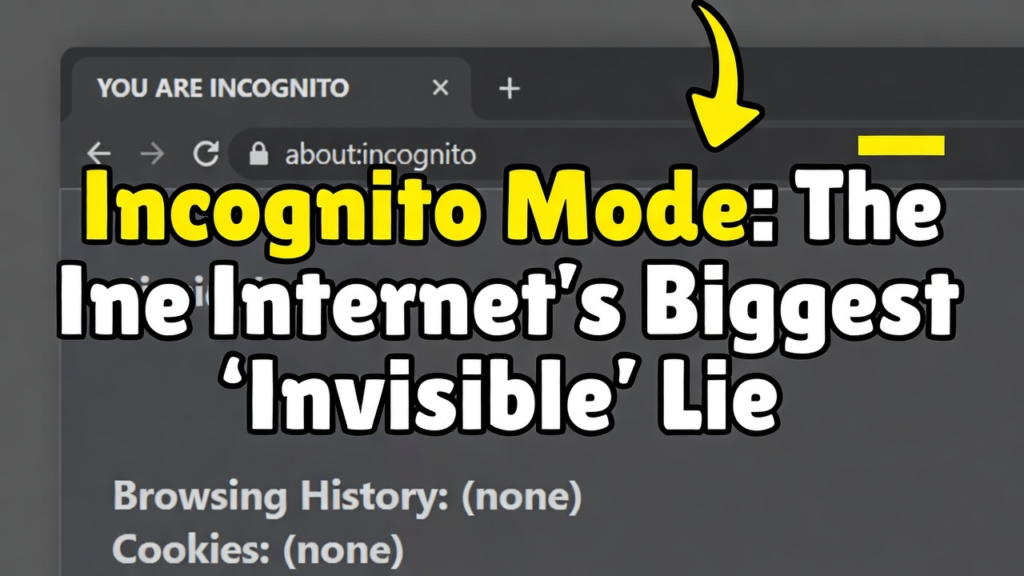
New tab.
Dark screen.
Mysterious little spy icon in the corner.
Suddenly you’re not just browsing you’re operating.
It feels secret. It feels secure. It feels like you just activated hacker mode.
But here’s the truth that might ruin the drama:
Incognito Mode is not invisibility. It’s housekeeping.
Yes. Housekeeping.
Let’s break your spy fantasy gently.
What Incognito Mode Actually Does
When you open an Incognito window, your browser simply decides:
“Okay, I won’t save this session.”
That means:
- No browsing history saved
- No cookies stored after closing
- No autofill memory
- No saved login sessions
So if someone grabs your laptop after you close the window, they won’t see what you searched.
That’s it.
It protects you from:
- Curious siblings
- Nosy roommates
- Friends borrowing your laptop
- Yourself (when you check your history later)
It does not protect you from the entire internet.
Who Can Still See You?
Here’s where things get less cinematic.
Even in Incognito Mode:
- Your Internet Service Provider (ISP) can still see the websites you visit.
- Your school or office network administrator can monitor traffic.
- Websites can still track your IP address.
- Search engines can still log activity.
Incognito doesn’t hide your identity from servers.
It doesn’t mask your IP address.
It doesn’t encrypt your traffic beyond normal HTTPS standards.
It simply prevents your browser from keeping receipts.
Think of it like eating snacks and throwing away the wrapper immediately. The store still knows you bought it.
Why Does It Feel So Secure?
Blame the design.
The dark theme.
The mysterious icon.
The word “Incognito.”
It sounds powerful. It feels elite.
But it’s mostly psychological.
When something looks private, we assume it is private.
And that false sense of security can lead people to believe they’re browsing anonymously — which is where problems start.
When Incognito Mode Is Actually Useful
Before we completely roast it, let’s give it credit.
Incognito Mode is useful for:
- Logging into multiple accounts at once
- Booking flights without saved cookies affecting prices
- Testing websites as a developer
- Using public or shared computers
- Searching for surprise gifts
It’s convenient. It’s practical.
It’s just not cybersecurity armor.
The Dangerous Confidence Boost
Here’s the real issue.
People often think Incognito Mode makes them untraceable.
That confidence can lead to risky behavior assuming no one can see their activity.
But using Incognito without understanding its limits is like wearing sunglasses and thinking you’re invisible.
You might feel hidden.
You’re not.
If You Actually Want More Privacy
If your goal is stronger online privacy, Incognito alone isn’t enough.
You’d need:
- A VPN (to mask your IP address)
- Privacy-focused browsers
- Tracker blockers
- Secure DNS
- Strong passwords and two-factor authentication
Incognito is step one not the final boss.
So… Is Incognito Useless?
No.
It does exactly what it promises:
It prevents your browser from saving your local activity.
But it never promised full anonymity.
The problem isn’t Incognito Mode.
The problem is the myth around it.
Final Verdict
Incognito Mode is not a magic invisibility cloak.
It won’t hide you from your ISP.
It won’t make you anonymous to websites.
It won’t erase your digital footprint from the internet.
It simply says:
“I won’t remember this on this device.”
And honestly? That’s still useful as long as you understand what it really does.
So next time you open that dark window and feel like a cyber ninja…
Just remember:
You’re hidden from your history.
Not from the world.