






“Blockchain: The Digital Bodyguard You Didn’t Know You Needed for Cybersecurity!”
In today’s tech world, we’ve heard a lot about blockchain thanks to Bitcoin and other cryptocurrencies. But let’s be honest, most of us are just waiting for the next big tech buzzword to fade away, right? However, blockchain isn’t going anywhere. In fact, it’s not just the backbone of digital currency; it’s becoming one of the most promising tools in cybersecurity.
Wait, what? Blockchain, the thing that powers Bitcoin, can actually help protect us from hackers? You bet! It’s the unsung hero of digital protection, and today, we’re going to take a deep dive into how blockchain is reshaping cybersecurity.
1. What Is Blockchain and Why Should You Care?
Before we jump into its magical cybersecurity powers, let’s start with the basics. Blockchain is essentially a digital ledger that records transactions across many computers. The cool part? It’s decentralized, meaning there’s no single point of failure. So, hackers trying to alter the data would need to hack every single computer on the network. Talk about a tough job!
But wait, there’s more. Blockchain transactions are immutable once data is recorded, it can’t be changed. If a hacker tries to tamper with a blockchain entry, it’s so obvious that it’s like someone using a highlighter to mark their crime. It’s the digital equivalent of trying to sneak into a bank vault with a neon sign saying, “I’m robbing you.”
2. Blockchain: Your New Cybersecurity BFF
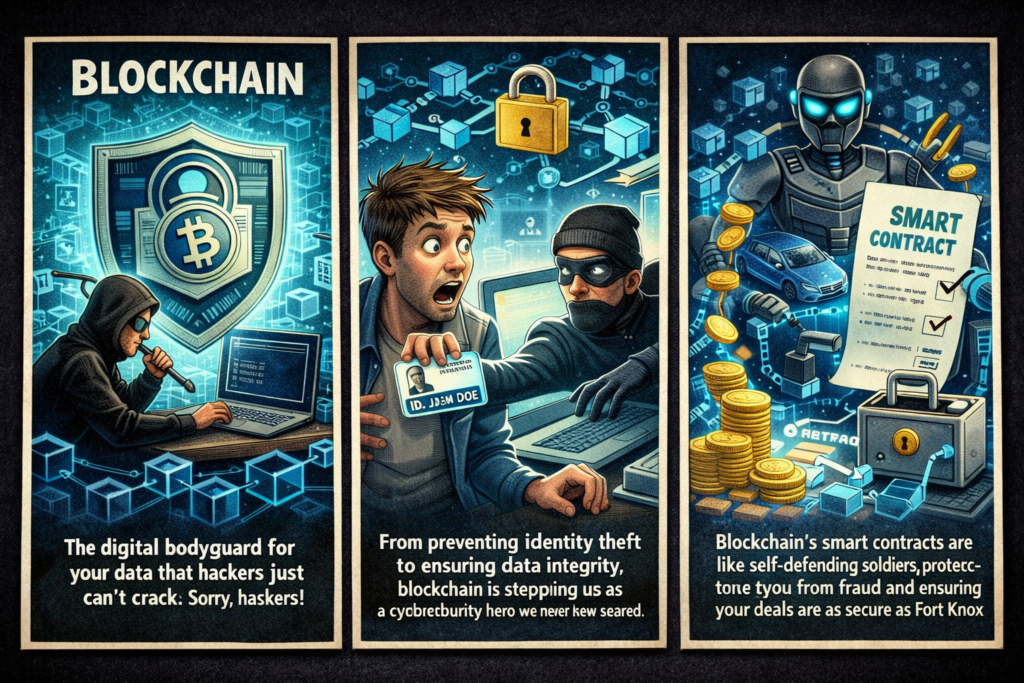
Now, let’s talk about how blockchain is enhancing cybersecurity in real life. First up, data integrity. In today’s world, ensuring data isn’t tampered with is like keeping your Netflix password safe from your roommates (we’ve all been there). Blockchain’s immutability means once data is recorded, it’s locked in place. Hackers can’t change your password without triggering an alarm so loud it could wake the entire internet.
But that’s just one trick in the bag. Blockchain is also great at protecting against identity theft. By using decentralized identities (DIDs), blockchain can help verify users without relying on centralized databases, which are prime targets for cyberattacks. Instead of storing your personal info in one giant, juicy target, blockchain spreads it out in a way that’s much harder to breach. Think of it as storing your treasure in a vault that no one can even find, let alone break into.
3. Blockchain and Smart Contracts: The Self-Defending Soldiers
Now here’s where blockchain gets even cooler: smart contracts. These are self-executing contracts where the terms are written directly into code. So, what does that have to do with cybersecurity? A lot. Smart contracts can automatically execute actions when certain conditions are met, without needing a middleman.
For example, imagine buying a car. The blockchain-based smart contract would make sure the car’s ownership only transfers once the payment is made. No shady business, no chance for fraud. It’s like having a bodyguard who makes sure everyone keeps their promises. And best of all? No one can modify the contract after it’s been set.
4. Blockchain Protecting Your Data from Hackers: The Digital Fort Knox
If you’re still skeptical about blockchain’s power, let’s talk about data breaches. Every day, hackers are trying to access sensitive information whether it’s your social security number, credit card info, or private emails. Blockchain steps in to safeguard data in a way that traditional security measures just can’t match. It adds an extra layer of defense, ensuring that even if hackers breach the system, they can’t alter or steal the data without a trace.
For example, in healthcare, blockchain can be used to secure medical records. Instead of storing records in vulnerable centralized databases, blockchain stores them across multiple systems, making it nearly impossible for hackers to alter someone’s medical history. It’s like trying to break into a house with a thousand doors good luck with that!
5. Blockchain: The Future of Cybersecurity?
So, is blockchain the future of cybersecurity? Well, it’s already making waves. While it’s still a relatively new technology, it’s showing incredible potential to revolutionize the way we protect data. From preventing fraud and identity theft to ensuring data integrity, blockchain is proving to be more than just a cryptocurrency tool. It’s becoming an essential part of the cybersecurity toolkit for the future.
Sure, blockchain isn’t a magic wand that will solve all our cybersecurity problems overnight, but it’s one heck of a bodyguard. And in a world where cyber threats are only getting more sophisticated, we could all use a little extra protection.
Conclusion: Blockchain – The Cybersecurity Gamechanger
In conclusion, blockchain is not just for Bitcoin anymore. It’s a powerful tool that’s transforming cybersecurity by providing stronger data protection, preventing fraud, and creating a future where digital threats are no longer a constant worry. The best part? It’s decentralized, transparent, and virtually tamper-proof.
So, the next time someone mentions blockchain, don’t just think of cryptocurrency. Think about how this technology is changing the way we protect ourselves in the digital world.
