







Why Your Wi-Fi Is Fast at Night but Slow During the Day
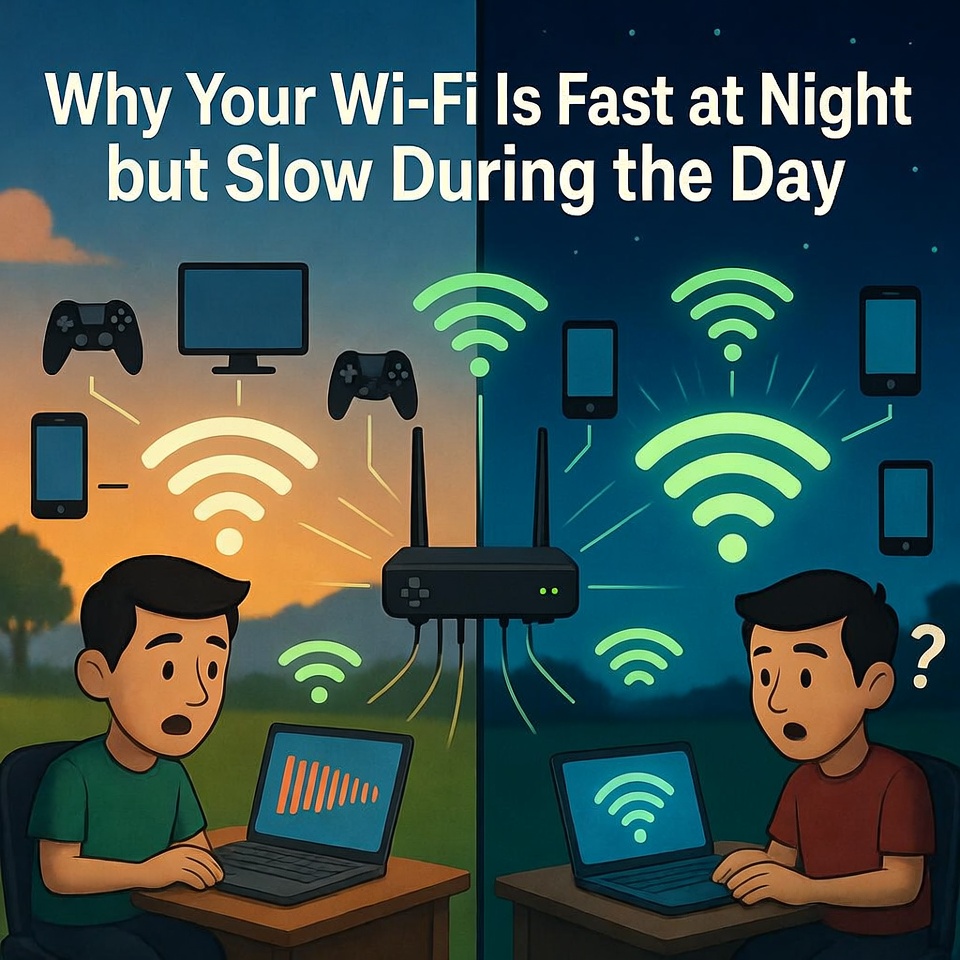
Wi-Fi often becomes slower during the day because more devices and users are connected to the same network. Network congestion, router limitations, and signal interference can reduce internet speed when many people are online at the same time.
Have you ever noticed something strange about your internet connection?
During the night, everything works perfectly.
Videos stream smoothly. Websites load instantly. Online games run without lag.
But during the day, the same internet suddenly becomes slow.
Videos buffer.
Websites take longer to open.
Online meetings begin to freeze.
Many people assume that their internet provider is simply unreliable. However, the real reason often has more to do with how networks are used throughout the day.
The Mystery of the Slow Daytime Internet
Imagine starting your day with an online meeting or school class.
You turn on your laptop, connect to Wi-Fi, and open a video call.
But something feels wrong.
The video becomes blurry.
The audio cuts in and out.
The connection suddenly drops.
Later that evening, you try the same connection again.
This time, everything works perfectly.
So what changed?
In most cases, the answer is network congestion.
Too Many Devices Using the Same Network
Modern homes are filled with devices that rely on internet access.
Smartphones
Laptops
Tablets
Smart TVs
Gaming consoles
Security cameras
Smart home devices
Each of these devices uses bandwidth when connected to the internet.
During the day, many of these devices may be active at the same time.
For example, someone might be attending online classes while another person is streaming videos or downloading files.
When too many devices compete for the same bandwidth, the network becomes overloaded.
This results in slower speeds for everyone.
Internet Traffic in Your Neighborhood
Another factor that affects internet speed is something called network congestion outside your home.
Internet service providers deliver connections through shared infrastructure.
This means many homes in the same neighborhood may use the same network lines.
During busy hours—such as daytime or early evening—many households are online simultaneously.
Streaming movies, gaming, attending online meetings, and browsing the web all increase traffic.
As more people connect, the network becomes crowded.
At night, however, fewer people are using the internet.
This allows your connection to operate at higher speeds.
Router Placement and Signal Strength
Another possible cause of slow Wi-Fi is signal interference.
Wi-Fi signals travel through walls, furniture, and other objects.
If your router is placed in a corner of the house or hidden behind furniture, the signal may weaken before reaching certain rooms.
Other electronic devices can also interfere with wireless signals.
Microwaves, cordless phones, and neighboring Wi-Fi networks may disrupt your connection.
Technicians often recommend placing routers in central, elevated locations to improve signal coverage.
Simple Ways to Improve Your Wi-Fi
Fortunately, there are several ways to improve your home network performance.
Some helpful steps include:
• Restarting your router regularly
• Limiting unnecessary background downloads
• Moving the router to a central location
• Upgrading to a newer router if the current one is outdated
• Using wired connections for devices that require stable internet
These adjustments can significantly improve internet stability.
Wi-Fi speed often changes throughout the day because of network congestion, multiple connected devices, and signal interference. While these problems may seem frustrating, understanding how networks work can help users improve their connection and maintain stable internet performance.
