







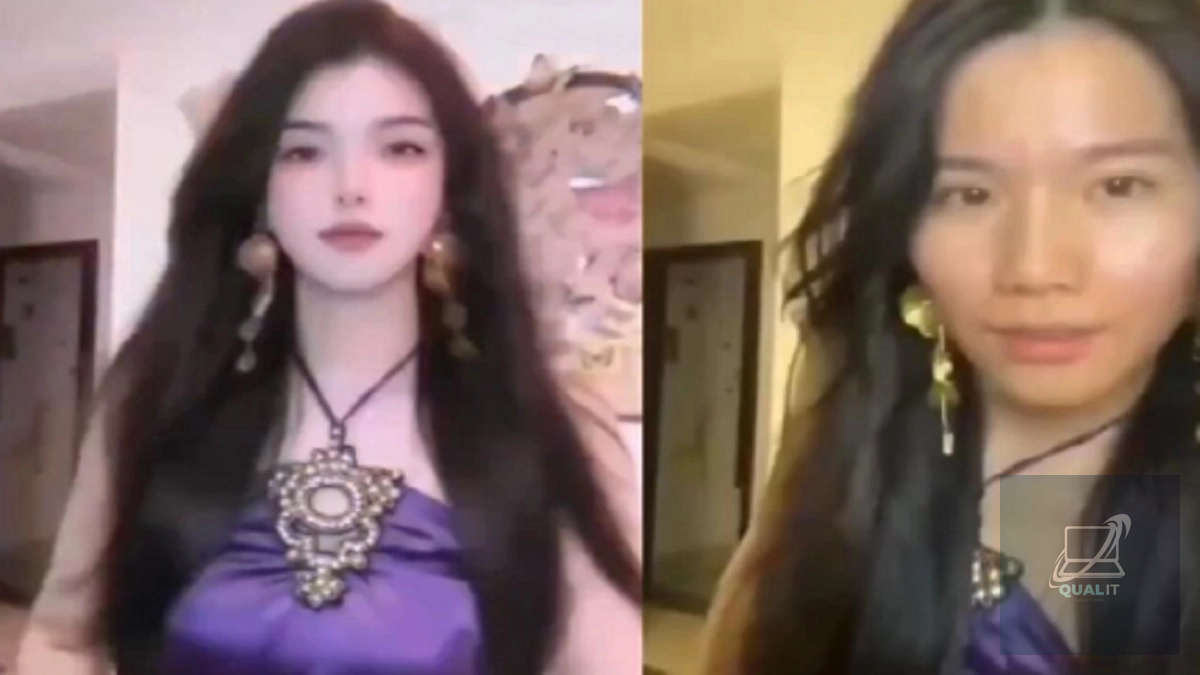
140,000 Followers Gone After Streamer’s Beauty Filter Malfunctions Live
A Chinese livestreamer reportedly lost around 140,000 followers after her beauty filter suddenly malfunctioned during a live broadcast 😮💔 What began as an ordinary stream quickly turned into one of the most talked-about online moments of the week.
It started like any other day. She logged in, greeted her audience, and began interacting with thousands of viewers who had tuned in to watch her in real time. The lighting was set, the camera angle was perfect, and the beauty filter—carefully adjusted to smooth skin, brighten eyes, and refine facial features—was working exactly as intended. Everything looked polished, effortless, and flawless on screen.
Then, in a matter of seconds, something changed.
Without warning, the beauty filter glitched and shut off. The enhanced version of her appearance disappeared instantly, replaced by her natural, unfiltered face. The shift was sudden and highly visible. Viewers who had been casually watching were caught off guard as they witnessed the transformation happen live.
There was no time to prepare. No chance to edit. No opportunity to switch cameras or restart the stream. It unfolded in real time, in front of thousands of people.
Within minutes, clips of the moment were recorded, reposted, and shared across multiple social media platforms. Short videos comparing the filtered and unfiltered versions began circulating widely. Comment sections filled with reactions—some expressing surprise, others criticism, and a few defending her. The conversation escalated rapidly, as viral moments often do.
According to reports, she lost approximately 140,000 followers shortly after the incident. The drop happened quickly, reflecting how fast online audiences can react—and how quickly support can shift in digital spaces.
For many viewers, the incident became more than just a technical error. It reignited a larger conversation about beauty filters and the expectations placed on online creators. Filters have become standard tools in livestreaming and content creation. With a single tap, they can smooth skin, reshape facial features, adjust lighting, and even alter facial structure. Over time, audiences grow accustomed to seeing these enhanced versions of people, sometimes forgetting that what they are looking at is digitally modified.
The contrast between filtered and unfiltered appearances can feel dramatic because viewers are comparing reality to a carefully curated digital version. In this case, the sudden removal of the filter highlighted that difference in a way that was impossible to ignore.
But behind the viral clip is a human being.
It’s easy to reduce moments like this to entertainment or gossip. However, behind every livestream, every curated post, and every carefully edited photo is a real person with real emotions. Content creators operate in an environment where appearance often plays a central role in engagement. Likes, comments, shares, and followers can be influenced by visual presentation. Over time, this creates immense pressure to maintain a consistent, “perfect” image.
For many streamers, beauty filters are not about deception—they are about meeting expectations. When audiences grow used to enhanced visuals, creators may feel that going without filters could hurt their reach, confidence, or income. The line between enhancement and authenticity becomes blurred.
The viral nature of this moment also highlights how unforgiving online culture can be. A single glitch, lasting only seconds, led to widespread scrutiny and immediate consequences. In traditional media, image editing happens behind the scenes. In livestreaming, there is no safety net. Technical issues are public, permanent, and replayable.
This incident serves as a reminder of how powerful digital tools have become. Beauty filters are sophisticated. They can subtly alter facial proportions, smooth textures, and enhance features in ways that feel almost natural. When used consistently, they can reshape perceptions—not only of the creator but also of beauty standards more broadly.
The danger lies in comparison. When viewers repeatedly see filtered faces, they may begin to measure real-life appearances against unrealistic digital ideals. This can affect self-esteem, body image, and expectations of what is considered “normal.” The more normalized digital perfection becomes, the harder it can be to appreciate natural variation in appearance.
At the same time, the reaction to this glitch raises uncomfortable questions. Why would a temporary glimpse of someone’s natural face cause such a dramatic loss of followers? What does that say about audience expectations? And why is authenticity sometimes met with criticism rather than support?
Some viewers defended the streamer, pointing out that everyone looks different without makeup, lighting, or filters. Others argued that heavy reliance on filters creates misleading impressions. The debate reflects a larger cultural tension between authenticity and performance in the digital age.
Social media platforms reward engagement. Engagement often favors visually striking content. As a result, creators adapt. Filters become tools not just for aesthetics but for survival in competitive online spaces. When the illusion breaks—even accidentally—the response can be swift and harsh.
Yet moments like this also create opportunities for reflection.
They remind us that perfection online is often manufactured. They reveal how much of what we see has been enhanced, adjusted, or curated. And they challenge us to question why natural features can seem “shocking” when compared to edited versions.
Perhaps the most important takeaway is empathy. It’s easy to watch a viral clip and form an opinion. It’s harder to consider how it feels to experience that moment live, knowing thousands of people are watching and judging in real time. Losing 140,000 followers is not just a statistic—it represents a sudden shift in public perception and, potentially, financial impact.
In a world increasingly shaped by digital presentation, authenticity remains complicated. Some creators are embracing more natural content and transparency about filters and editing. Others continue to rely on enhancements as part of their brand. There is no single answer.
What this incident ultimately highlights is the fragile balance between reality and representation online. Technology allows us to refine our appearance with precision, but it also raises expectations that can be difficult to maintain. When filters become the norm, reality can feel like the exception.
Behind every screen is a person—not a preset, not a filter, not a pixel-perfect image. Just a human being navigating the same insecurities and pressures many of us face.
As the clip continues to circulate and conversations continue to unfold, one question lingers: in an era obsessed with flawless visuals, are we forgetting how to appreciate real faces? And perhaps more importantly, what does our reaction to moments like this reveal about how we define beauty in the digital age?
